DNV 2.7-1 Explained: What Offshore Container Certification Covers
By Container One Depot Equipment Team
What DNV 2.7-1 is
DNV 2.7-1 — now formally published as DNV-ST-E271 — is the standard governing offshore containers: their design, manufacture, testing, certification, marking, and periodic inspection. It was developed by Det Norske Veritas and has become the reference standard across the offshore oil, gas, and marine industries.
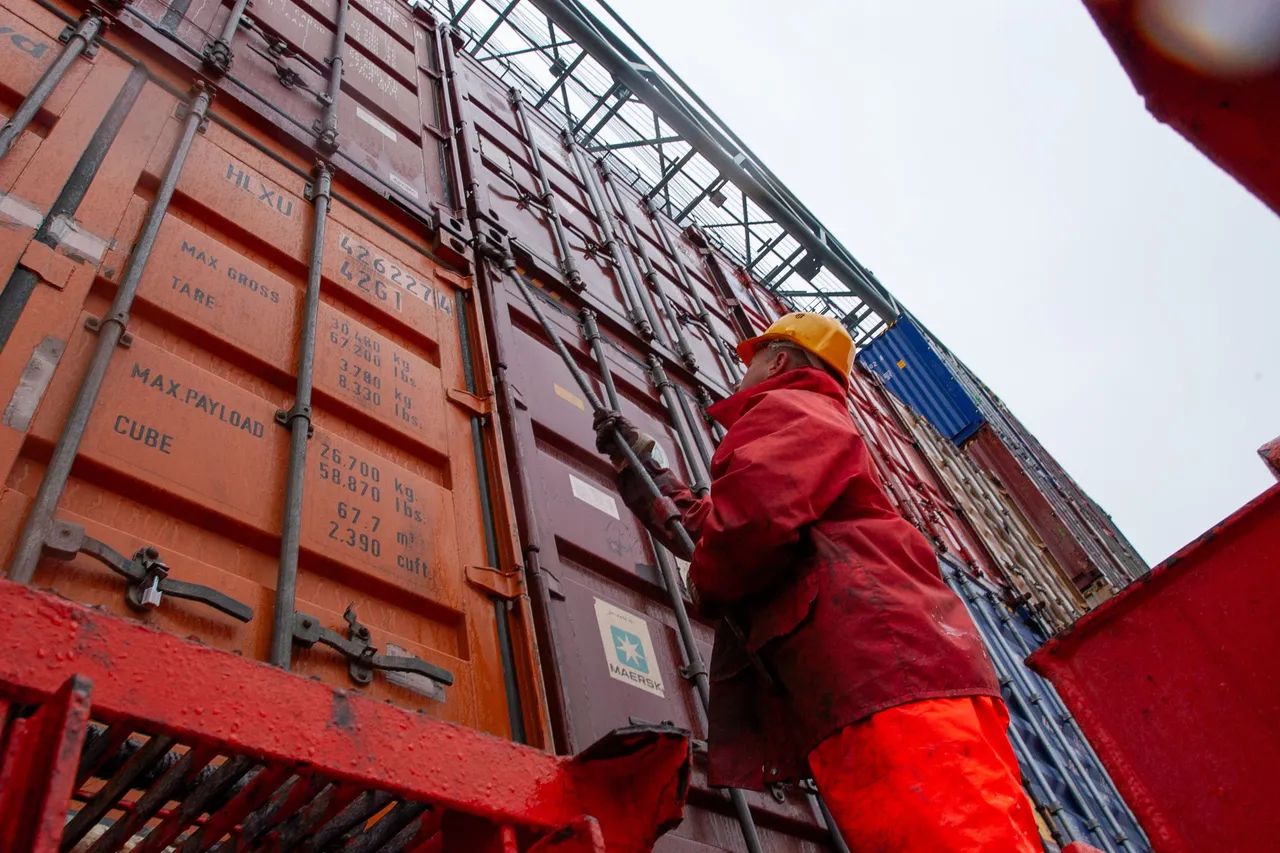
It exists because offshore work does something to containers that ordinary logistics doesn't: it lifts them, repeatedly, by crane, between a moving vessel and a fixed or floating installation, in open sea conditions. A standard ISO shipping container is engineered to be lifted in controlled port conditions and stacked. It is not engineered for a crane operator managing a load through swell, and it is not certified for it.
What counts as an offshore container
The standard defines an offshore container as a portable unit for repeated use transporting goods or equipment, handled in open seas, to, from, or between fixed or floating installations and ships. It applies to units with a gross weight up to 25,000 kg.
Within that, the standard recognises broad categories — offshore freight containers for cargo, offshore service containers (which house equipment or working space rather than simply carrying goods), and offshore waste skips. The category affects which specific requirements apply, so it's worth knowing which one your intended use falls under before you start comparing units.
What the standard tests that ISO doesn't
The substantive difference is in materials and in lifting.
On materials, the main structure must be carbon steel, carbon-manganese steel, or an equivalent grade, and it must pass Charpy impact testing. That test measures resistance to brittle fracture — steel that behaves acceptably at room temperature can fail suddenly and catastrophically when cold and shock-loaded, which is precisely the combination a crane lift in a North Sea winter produces. ISO container standards do not impose that requirement.
On lifting, the design has to account for three distinct phases: delivery of the container to shore, transport on board the vessel, and the lifting operation at the offshore installation itself. That third phase is the one that drives the structural requirements, because the loads during a dynamic sea lift substantially exceed anything the container sees in a port.
Certification also isn't a one-time event. The standard covers periodic inspection, which means a certified container carries an ongoing obligation, not just a certificate issued at manufacture.
Who is allowed to certify
Certification against the standard is issued by recognised classification societies. Alongside DNV itself, that includes Lloyd's Register, Bureau Veritas, and the American Bureau of Shipping.
A container certified by any of these to the standard is legitimate. Certification issued by a party that isn't a recognised classification society is not the same thing, however confident the paperwork looks — and this is a real distinction to check rather than assume, particularly on units bought through intermediaries.
2.7-1, 2.7-2 and 2.7-3 are not interchangeable
You will encounter three DNV numbers in offshore equipment, and buying against the wrong one is a costly error because a certificate issued under one does not satisfy another.
2.7-1 covers offshore containers — the general-purpose units this article is about, carrying goods and equipment to and from installations by crane lift. Freight containers, service containers and waste skips fall here.
2.7-2 covers offshore service modules and more specialised units — things more complex than a container but not permanently installed, such as equipment skids and purpose-built portable modules.
2.7-3 covers portable offshore units, a category extending to units with equipment, electrical systems and safety systems inside, where operational safety in hazardous areas is the governing concern rather than simply structural capability under lift.
Published descriptions of exactly where the boundaries fall vary between sources, and the weight thresholds quoted are not consistent either. Rather than reasoning from a general description, work from the specific requirement: your operator, contract, or client will specify which standard applies to your scope, and the certificate on the unit will state which standard it was issued against. Match those two and the question is settled. If they don't match, the unit is wrong for the job regardless of how good it is.
The lifting set is certified separately
A point that catches out buyers new to offshore equipment: the container's certification and the certification of the slings and shackles used to lift it are two different things.
The lifting set has its own documentation, its own inspection regime, and its own expiry. A certified container with an out-of-date or undocumented lifting set will still be refused at the point of lift, because the assembly as a whole has to be compliant, not just the box.
So when you're buying, ask explicitly whether a lifting set is included, whether it's certified, and what its inspection status is. If it isn't included, that's a separate procurement with its own lead time — worth knowing before you plan a mobilisation around the container's arrival.
The same logic applies to the padeyes and lifting points on the container itself. Those are part of what the standard covers and part of what periodic inspection examines.
Periodic inspection and what re-certification involves
Certification to the standard is not a one-time event at manufacture. Offshore containers are subject to periodic inspection, and compliance is a continuing state rather than a permanent attribute.
This has a direct consequence for buyers. A container built and certified years ago is only currently compliant if it has been inspected on schedule since. A unit whose inspection has lapsed is, in practical terms, not usable offshore until it's been re-inspected — which is an achievable fix, but one with cost and lead time you should know about before purchase rather than after.
Re-inspection examines structure, lifting points, and the general condition of the unit against the standard, and may identify remedial work needed to bring it back into compliance. On an older or harder-worked container, that remedial work can be substantial.
So when you compare two certified units, compare the inspection dates as carefully as the prices. A cheaper container with an expiring inspection and an unknown remedial requirement may not be cheaper at all.
Reading the plate and markings
Certified offshore containers carry marking that identifies what they are and what they're rated for, and reading it is a quick sanity check against the paperwork you've been handed.
Expect to find the unit's identification, its gross weight rating, tare weight and payload, the standard it's certified against, the certifying body, and inspection information. Check that every one of these matches the certificate — mismatches between plate and paperwork are exactly the sort of thing worth resolving before money changes hands.
Pay particular attention to the gross weight rating against your intended load. A container rated below what you plan to put in it is not usable for that job, and this is a straightforward arithmetic check that people skip because it seems obvious.
If any marking is illegible, painted over, or appears to have been altered, treat that as a significant issue rather than a cosmetic one. On certified equipment, the markings are part of the compliance.
What to demand from a seller
Ask for the certification documentation itself, and read the dates. The original certificate tells you the unit was built to the standard. The most recent periodic inspection tells you whether it still complies — and that second date is the one your operator, your client, or your insurer will actually care about.
Confirm the certifying body is a recognised classification society. Confirm the container's data plate and markings match the documentation. Confirm the gross weight rating suits your intended load. And confirm the category matches your use, since a freight container and a service container are certified against different expectations.
Do this before you reserve rather than after. Certification status is the entire reason for the price difference between an offshore unit and a standard one, and it's not something that can be established retrospectively — our deposit holds the unit and locks the price while these documents get confirmed, which is exactly what that window is for.
When you actually need DNV — and when you don't
You need it when a container will be lifted by crane in offshore conditions, used on a platform or vessel, or when a contract, operator, or insurer specifies it. In those cases it's usually a hard gate, not a preference — an uncertified unit will simply be refused at the point of lift, which is an expensive place to discover the problem.
You don't need it for onshore storage, jobsite use, or road transport, even in a heavy industrial setting. Offshore certification adds real cost for structural capability that onshore work never calls on. If the container is staying on land, container grades explained covers the grading system that actually applies to your decision.
Our Offshore & Certified Containers range covers certified dry, half-height, open-top, and refrigerated configurations. If you need offshore cold storage specifically, the certification requirements here apply on top of everything in the reefer container buying guide — both sets of questions have to be satisfied by the same unit.
Frequently asked questions
- What is DNV 2.7-1 certification?
DNV 2.7-1, now published as DNV-ST-E271, is the standard governing offshore containers — their design, manufacture, testing, certification, marking and periodic inspection. Developed by Det Norske Veritas, it is the reference standard across the offshore oil, gas and marine industries for units that will be lifted by crane in open-sea conditions.
- How is a DNV container different from a standard shipping container?
The differences are in materials and lifting. DNV main structure must be carbon steel, carbon-manganese steel or equivalent and must pass Charpy impact testing for resistance to brittle fracture — a requirement ISO container standards do not impose. The design must also account for lifting at an offshore installation, where dynamic sea-lift loads substantially exceed anything a container experiences in a port.
- Who can certify an offshore container to DNV 2.7-1?
Certification is issued by recognised classification societies. Alongside DNV itself, these include Lloyd's Register, Bureau Veritas and the American Bureau of Shipping. Certification issued by a party that is not a recognised classification society is not equivalent, however convincing the paperwork appears — worth verifying rather than assuming, especially on units bought through intermediaries.
- What documentation should I ask for when buying a DNV container?
Ask for the certification documentation and read the dates. The original certificate shows the unit was built to the standard; the most recent periodic inspection shows whether it still complies, and that second date is what an operator or insurer will care about. Also confirm the certifying body, that data plate markings match the paperwork, and that the gross weight rating and category suit your use.
- Do I need a DNV certified container for onshore use?
No. Offshore certification adds real cost for structural capability that onshore work never calls on. You need it when a container will be lifted by crane in offshore conditions, used on a platform or vessel, or when a contract, operator or insurer specifies it — in which case it is a hard gate, since an uncertified unit will be refused at the point of lift.