Reefer Container Buying Guide for Cold Storage
By Container One Depot Equipment Team · Updated August 5, 2026
How a reefer container is built
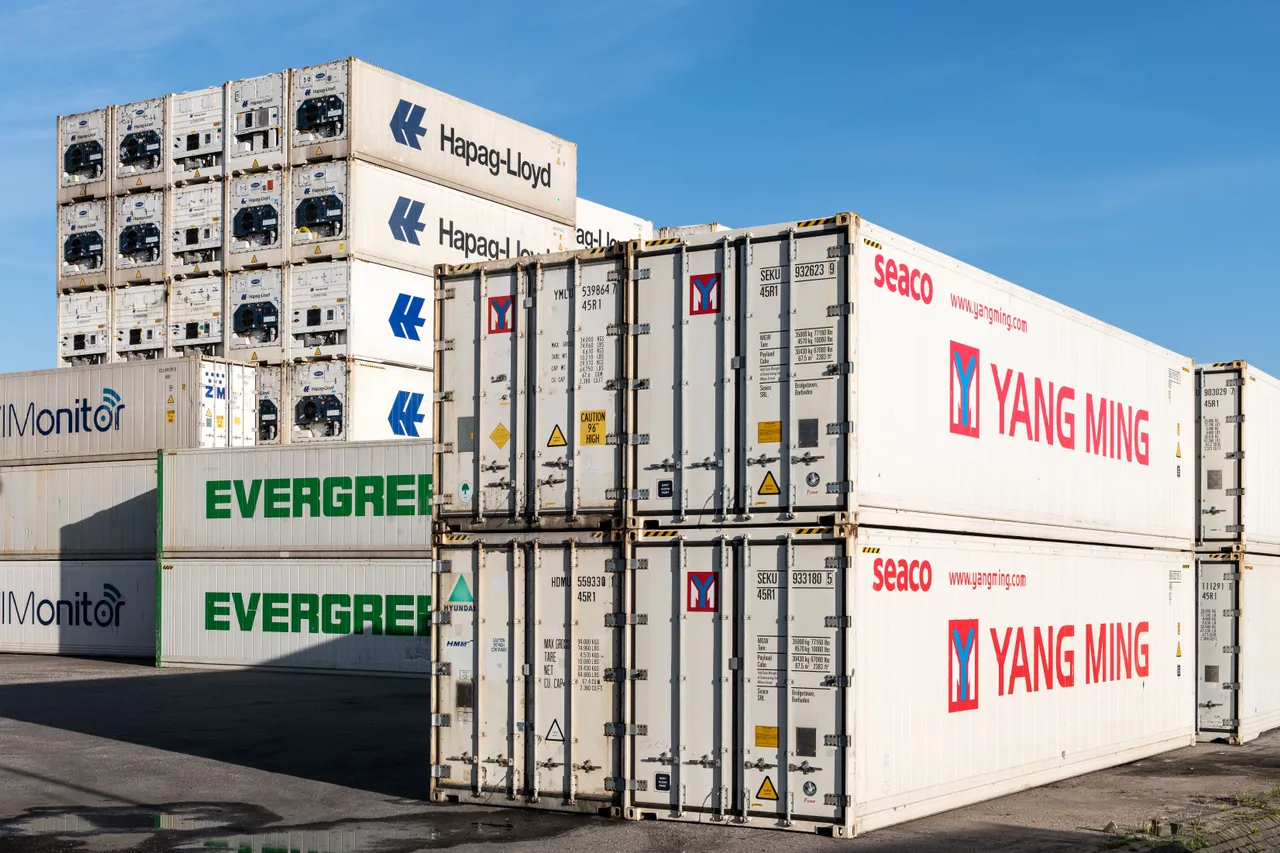
Refrigerated containers (reefers) are built around a self-contained refrigeration unit — usually Thermo King or Carrier — mounted to one end of an insulated steel box. Unlike a standard dry container, the walls, floor, and roof are insulated to hold a set temperature range, and the refrigeration unit runs independently off its own power connection rather than relying on ambient conditions.
Two construction details are worth knowing because they affect how you use the container. The interior is typically lined with stainless or aluminium rather than the timber flooring of a dry box, which makes it washable and suitable for food contact. And the floor is formed into T-section channels rather than being flat — those channels exist to let cold air circulate underneath the load and return to the unit, which is how the container holds an even temperature front to back.
That second detail has a practical consequence people discover the hard way: you cannot pack a reefer solid. Air has to move around and under the product. A container loaded wall-to-wall and floor-to-ceiling will develop warm spots regardless of how well the machinery works, because the cold air has nowhere to go.
What a reefer does — and what it doesn't
A reefer container is a holding machine. Its refrigeration capacity is sized to maintain a setpoint against heat leaking in through the insulation, plus the modest extra load of doors opening and product respiring. It is very good at that, for years at a time.
It is not a rapid-freezing machine. If your product arrives warm and needs its core temperature driven down quickly — the requirement in seafood, meat, and some prepared-food and pharmaceutical operations — that's blast freezing, which needs several times the refrigeration capacity and a different configuration entirely. Loading warm product into a standard reefer and expecting blast performance produces slow freezing, cell damage, and hard duty on machinery not sized for it. Our blast freezer vs. standard reefer guide covers where the line falls.
For the large majority of uses — holding product that arrives already at temperature — a standard reefer is the correct and considerably cheaper answer.
Temperature range and setpoints
Standard container refrigeration units cover a broad range, typically spanning chiller temperatures through to solid freezer temperatures, which is why the same container can serve produce storage or frozen storage depending on how it's set. Specialist deep-freeze units extend considerably lower for applications that require it.
In practice, most operations run in one of two bands. Chiller duty covers roughly 32–40°F and suits fresh produce, dairy, flowers, and chilled distribution. Freezer duty runs at or below 0°F for frozen product, with ice cream and similar goods wanting colder still to hold proper texture.
Choosing a setpoint is a product decision, not an equipment one, and colder is not automatically safer. Many crops and goods suffer damage below their tolerance — chilling injury in produce is the classic example, where the harm doesn't become visible until the product is warmed for sale. Confirm what your specific product wants before setting the box.
The setpoint also drives your running cost more than any other single factor, because a freezer setpoint means the unit fights a much larger temperature differential continuously. If your product keeps perfectly well at 38°F, running the container at 0°F is money spent for no benefit.
Sizes and configurations
Refrigerated containers are available across a range of sizes, from compact units suited to small operations up to 40ft, with 20ft and 40ft being the most common. High cube variants add roughly a foot of interior height, which matters if you're stacking pallets tall — though remember that airflow space at the top of the load is not wasted space in a reefer, it's functional.
Size to your peak requirement rather than your average. Cold storage demand is rarely steady; it spikes at harvest, at seasonal peaks, or around particular contracts. A unit that handles a normal week and overflows during your busiest fortnight is undersized precisely when the stored product is most valuable.
And remember the one-container-one-temperature constraint. If you need to hold products with genuinely incompatible temperature requirements at the same time, that's two containers, not one bigger one. Operations whose crops or products arrive at different times of year can often sequence a single unit across the season instead, which is why this is worth thinking through before choosing a size.
Clip-on vs. undermount: what the difference means for you
Mount type matters: clip-on units sit on the outside of the container, bolted to the end wall, and are easier to service or swap out entirely since a technician can access the whole unit without going inside the box. Undermount units sit beneath the floor instead, which frees up a few inches of usable length inside the container — a real advantage if you're maximizing interior storage or pallet count, and it's common on newer over-the-road reefers built for tighter logistics tolerances.
If ease of future servicing matters more than a few inches of interior space, clip-on is the simpler long-term choice. If interior capacity is the priority and you're comfortable with harder-to-access maintenance, undermount is worth the trade-off.
Questions to ask about maintenance history
For farm and produce cold storage, ask about the unit's temperature range and whether it's been running consistently versus sitting idle. A unit that's been in active cold-chain service usually has a more predictable maintenance history than one that's been parked for years, since regular operation tends to surface (and get) mechanical issues addressed rather than letting them go unnoticed.
It's also worth asking whether the refrigeration unit has had recent service on its compressor and door seals — the two components most likely to need attention on an older unit, and the two that most directly affect how well it holds temperature.
Ask for running hours specifically. A container refrigeration unit's service life is measured in operating hours rather than calendar years, so two units of the same age can be at very different points in their lives. Our used reefer container inspection checklist covers the full pre-purchase inspection, separating the checks on the box from the checks on the machinery.
Power: the constraint that stalls most projects
This is the single most common reason a reefer purchase goes wrong, and it has nothing to do with the container. Container refrigeration units are built around three-phase power, commonly 440/460V — an industrial specification that many sites simply don't have.
If your site has single-phase service, which covers most residential supplies and a great many farm outbuildings and small commercial premises, a standard reefer will not simply plug in. That's solvable — a transformer or phase converter, a service upgrade through your utility, or a generator set — but each is a real cost and lead time that belongs in your project budget from the start rather than being discovered after delivery.
The container also arrives with its own power cable of finite length, commonly around 60 feet, connected at the machinery end. That fixes the container's orientation relative to your power drop, which needs deciding alongside which way the doors face.
Our reefer container electrical requirements guide covers voltage, breaker sizing, plug types, and the options when your site can't supply what the unit needs. If there's no adequate service at all, clip-on vs. undermount gensets covers powering a container off-grid.
New, used, and judging condition
The condition terminology used for dry containers — Cargo Worthy, Wind & Water Tight, One-Trip — carries across to reefers but tells you only half the story, because it describes the box rather than the machinery. A container can be structurally excellent and carry a refrigeration unit near the end of its life, or the reverse.
So judge a reefer on two axes. On the box: structural integrity, corner castings, floor condition including those T-section channels, and above all the integrity of the insulation and door seals. On the machinery: running hours, service history, whether it's been operating consistently or sitting idle, and how it behaves under load.
Insulation deserves particular attention because damage to it is effectively permanent and shows up as a higher power bill for the rest of the container's life. The simplest test costs nothing: step inside, close the doors, let your eyes adjust, and look for daylight. Any light getting in means outside air is getting in too, and the unit will fight it continuously.
Counter-intuitively, a unit that's been running consistently in service often presents better than one parked for years. Regular operation surfaces faults and gets them fixed; long idleness lets seals dry out and problems accumulate unnoticed. Container grades explained covers the grading terminology itself in more depth.
What it costs to own
The purchase price is the smallest number in a reefer's lifetime cost, and buyers who plan only for it are frequently surprised.
You are buying two assets with different lifespans. The insulated steel box has a service life commonly cited at 25 years or more. The refrigeration unit is typically rated in the region of 15,000 to 20,000 operating hours — roughly five to seven years of continuous duty. The machine will very likely need major intervention long before the box does, and that eventual repair-or-replace decision is a real, foreseeable cost rather than bad luck.
Electricity is the largest recurring expense for a unit in static service, driven mainly by setpoint, ambient temperature, door discipline, and insulation condition. Servicing typically runs once or twice a year for static use. Over a few years of continuous operation, running costs can approach or exceed the purchase price.
None of that argues against buying — it argues for comparing units on total cost rather than sticker price, and for treating a cheap unit with high running hours or damaged insulation as what it is: a different purchase at a different price, not a bargain. Our guide to what a reefer container actually costs to own works through the full picture, including how to build an estimate specific to your utility rate and duty cycle.
If your requirement is short-term or seasonal, the arithmetic may favour renting instead — renting vs. buying a refrigerated container covers where the break-even generally sits.
Common applications
Farm and produce operations use reefers to remove field heat and hold crops at their proper storage temperature, which does more for shelf life than anything applied later in the chain. Because holding temperatures are crop-specific and colder is not always safer, the setpoint decision matters as much as the equipment — our guide to cold storage containers for farms and produce covers the crop temperature groups and the mixed-crop problem.
Food service, retail and distribution use them as overflow and buffer capacity — additional chilled or frozen space during peaks without committing to construction.
Pharmaceutical and other regulated cold-chain applications use them where the requirement is controlled storage with auditable records, which brings additional requirements covered below.
Offshore and marine operations need cold storage that can be craned onto a vessel or platform, which requires certification the ordinary grading system doesn't address — see DNV 2.7-1 explained.
And a large share of reefers end their working lives as fixed cold storage on a single site, never moving again. That use case changes the priorities: efficiency and serviceability matter more than portability, and grid power or a generator matters more than transport arrangements.
Pharmaceutical and precision cold-chain use
Pharmaceutical and other precision cold-chain uses should confirm calibration and temperature-logging capability before relying on a unit for regulated storage — not every reefer ships with a logging system installed, and regulated storage typically requires continuous, auditable temperature records rather than just a working thermostat.
If the refrigeration unit ever needs replacing
Reefer units pair with our Refrigeration Units & Gensets category as a cross-sell — if a container's onboard unit ever needs replacing, that's where to look for a compatible clip-on or undermount replacement rather than replacing the entire container.
Choosing between the two dominant brands is its own decision: Thermo King vs. Carrier covers where each tends to be stronger, and why local service coverage usually settles it.
Where to go next
Three questions decide most reefer purchases, and each has its own guide.
Can my site power it? Most units need 460V three-phase — see reefer container electrical requirements for the voltage, breaker, and plug details, and what to do if your site is single-phase only. If there's no adequate service at all, clip-on vs. undermount gensets covers powering a container off-grid.
Is this specific unit sound? Our used reefer container inspection checklist splits the box checks from the machinery checks and flags which findings are cosmetic and which should end the conversation.
Does it need to be certified? If the container will be craned onto a vessel or platform, ordinary grading isn't enough — DNV 2.7-1 explained covers offshore certification and what documentation to ask for.
Frequently asked questions
- What is a reefer container?
A reefer is a refrigerated shipping container: an insulated steel box with a self-contained refrigeration unit, usually Thermo King or Carrier, mounted at one end. The walls, floor and roof are insulated to hold a set temperature, and the refrigeration unit runs off its own power connection independently of outside conditions.
- What temperature range does a reefer container cover?
Standard container refrigeration units typically span chiller temperatures through to solid freezer temperatures, which is why the same container can serve produce or frozen storage depending on how it is set. Most operations run either chiller duty around 32 to 40°F or freezer duty at or below 0°F. Specialist deep-freeze units extend considerably lower.
- Why can't you pack a reefer container full?
Cold air has to circulate around and under the load for the container to hold an even temperature front to back — that is what the T-section floor channels are for. A container loaded wall-to-wall and floor-to-ceiling will develop warm spots regardless of how well the machinery works, so usable capacity is meaningfully less than internal volume.
- What size reefer container do I need?
Sizes run from compact units up to 40ft, with 20ft and 40ft the most common, and high cube variants adding roughly a foot of interior height. Size to your peak requirement rather than your average, since cold storage demand spikes at harvest or seasonal peaks — and remember that one container holds only one temperature.
- What is the most common mistake when buying a reefer container?
Not checking that the site can power it. Container refrigeration units are built around three-phase power, commonly 440/460V, which many sites do not have. Discovering this after delivery turns a straightforward purchase into an electrical project, so confirm the supply requirement against your site before reserving anything.
- How do you judge the condition of a used reefer container?
On two axes rather than one. The box is judged on structural integrity, corner castings, floor condition and above all insulation and door seal integrity. The machinery is judged on running hours, service history and behaviour under load. A container can be structurally excellent while carrying a refrigeration unit near the end of its life, or the reverse.