Cold Storage Containers for Farms and Produce Operations
By Container One Depot Equipment Team
Post-harvest cooling decides shelf life
Produce starts deteriorating the moment it's picked. Respiration continues, moisture is lost, and field heat — the warmth the crop carries out of the field — accelerates all of it. The single most effective intervention available to a grower is removing that field heat quickly and then holding the crop at an appropriate temperature.
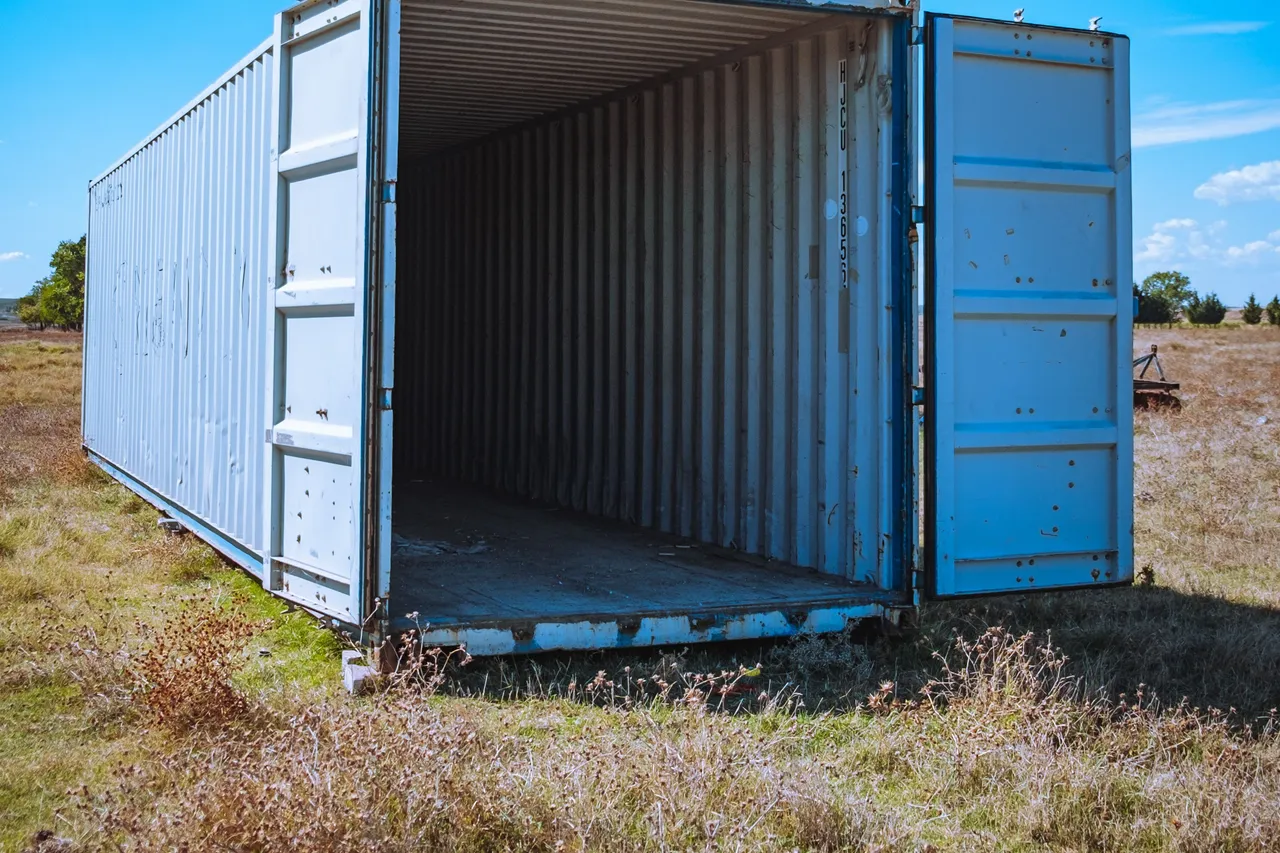
For operations without a permanent cold room, a refrigerated container is the most direct way to get that capability. It arrives as a working cold store, needs no construction, and can be sited where the crop actually comes in rather than where a building happens to exist.
What follows covers the decisions that matter: what temperature your crop actually wants, how to size a unit, the power reality on farm sites, and how the purchase interacts with Section 179 timing.
Holding temperature is crop-specific — and colder isn't better
The most consequential mistake in on-farm cold storage is assuming that colder is always safer. It isn't. Many crops suffer chilling injury when held below their tolerance, and the damage is often invisible until the produce is warmed for sale.
Broadly, crops fall into three temperature groups. Most temperate fruits and leafy vegetables store best just above freezing, in the region of 32–36°F. Citrus and subtropical crops generally want warmer conditions, commonly around 45–50°F. And chilling-sensitive crops — bananas, tomatoes, and a number of other warm-climate products — need warmer still, often in the region of 54–59°F, below which they suffer damage rather than benefit.
Put tomatoes in a box set for leafy greens and you get pitting, failure to ripen properly, and off flavours — from equipment working exactly as instructed. Treat these ranges as a starting point and confirm against extension-service guidance for your specific crop and variety, because the tolerances vary and the consequences of getting them wrong are borne at the point of sale.
The practical implication for equipment: a standard reefer's setpoint range comfortably covers all three groups, so the container is not the constraint. Your knowledge of the crop is.
The mixed-crop problem
One container holds one temperature. That is the central constraint of container cold storage and it deserves thought before purchase rather than after.
A diversified operation growing leafy greens, tomatoes, and citrus has three incompatible storage requirements. Setting a single container to a compromise temperature satisfies none of them properly — it's too cold for the tomatoes and too warm for the greens, and both deteriorate faster than they should.
There are three workable responses. Run multiple containers at different setpoints, which is the cleanest answer and often more affordable than it sounds given that smaller units are available. Set the container for your highest-value or most temperature-sensitive crop and handle the others differently. Or sequence usage across the season, if your crops come in at different times and don't need simultaneous storage — which is frequently the case and is the reason a single unit works for more operations than the theory suggests.
Work out which of these describes your operation before choosing a size, because it changes the answer.
Sizing for your operation
Refrigerated containers are available in a range of sizes from compact units up to 40ft, which covers everything from a market garden to a substantial commercial operation.
Size to peak throughput rather than average. Cold storage requirements for produce are not steady — they spike at harvest and fall away between. A unit that comfortably handles your average week and overflows during your busiest fortnight is undersized in the way that actually costs you, because the overflow occurs precisely when the crop is most valuable and most vulnerable.
Account for airflow as well as volume. Produce cannot be packed solid; air has to circulate around and through the load for the container to hold an even temperature. The T-section channels in a reefer floor exist to let air move underneath the load, and blocking them undermines the whole system. Usable capacity is meaningfully less than internal volume, and pallet configuration matters.
Consider door access patterns too. An operation loading and unloading many times a day pays a real energy and temperature-stability penalty for it, and a layout that reduces door openings — or a second smaller unit for high-turnover product — is worth thinking about at the sizing stage.
Power: the farm-site reality
This is where on-farm cold storage projects most often stall, and it should be checked before anything else.
Container refrigeration units are built around three-phase power, commonly 460V. A great many farm sites have single-phase service only, particularly at outbuildings and pack sheds away from the main service. A standard reefer will not run on that supply without intervention.
The options are a transformer or phase converter, a service upgrade through your utility, or a generator set. Which makes sense depends on your site, your distance from existing three-phase service, and whether you're likely to add other three-phase equipment later. Our reefer container electrical requirements guide covers the voltage, breaker, and plug specifics you'll need to give an electrician.
For remote field locations with no adequate service at all, a generator is often the pragmatic answer, and clip-on vs. undermount gensets covers which arrangement suits a container that stays put versus one that moves. Establish the power route and its cost before you reserve a container — it is part of the project budget, not an afterthought.
Container vs. building a cold room
The alternative to a container is constructing insulated cold storage, and the comparison usually favours the container for operations at farm scale.
A container arrives complete. There is no construction, no contractor scheduling around your season, and no planning process for a unit that isn't a permanent structure — though local rules vary and are worth checking. It works from the day it's delivered, which matters enormously if the decision is being made close to harvest.
It is also relocatable. If your operation changes, the packing area moves, or you lease the land, the container goes with you. A built cold room does not, and that difference is significant for tenant farmers and for operations still finding their shape.
And it's reversible. A container that turns out to be surplus can be sold, recovering a meaningful share of the outlay. Construction costs are sunk.
Where a built room wins is at large scale, where you need multiple temperature zones in one facility, or where the storage is genuinely permanent infrastructure. Many operations end up doing both — containers first, a building later once the volumes justify it.
Section 179 and when you buy
For a farm business, a refrigerated container is business equipment, and that opens a tax consideration worth coordinating with the purchase timing.
Section 179 may allow a qualifying business to deduct the full purchase price of eligible equipment in the year it's placed in service, rather than depreciating it across several years. Agricultural operations are among the most common users of this deduction precisely because they buy tangible equipment outright.
The timing detail that matters: the deduction is generally tied to the year the equipment is placed in service — ready and available for use — not merely purchased. A unit delivered and commissioned in December sits in a different tax year from the same unit arriving in January. If you're buying partly to offset a strong year's income, that date is the one to work backwards from, and delivery lead time is part of the plan.
Limits, phase-outs, and eligibility change year to year and depend on your circumstances, so this is not tax advice — our Section 179 guide covers the general shape and your accountant should confirm how it applies to your operation. Every unit we sell comes with an itemised invoice suitable for supporting the deduction.
What to specify when you buy
Five things to settle before reserving. The setpoint range you need, driven by your crops rather than by what sounds impressive. The size, driven by peak throughput and realistic airflow allowance. The power route, confirmed with an electrician against the unit's actual nameplate. The delivery date, coordinated with both your harvest and any Section 179 timing. And the condition of the specific unit, particularly its refrigeration machinery.
That last one deserves real attention on a used purchase — our used reefer container inspection checklist covers what to check and which findings should end the conversation, and what a reefer container actually costs to own covers why running hours on the refrigeration unit matter as much as the asking price.
If the requirement is seasonal with long idle stretches, it's worth checking whether renting fits better — renting vs. buying a refrigerated container works through where the break-even lands. Otherwise, our refrigerated containers range covers the available sizes and configurations, and the reefer container buying guide covers the wider picture.
Frequently asked questions
- What temperature should a cold storage container be set to for produce?
It depends on the crop, and colder is not automatically safer. Most temperate fruits and leafy vegetables store best just above freezing, around 32 to 36°F. Citrus and subtropicals generally want roughly 45 to 50°F. Chilling-sensitive crops such as bananas and tomatoes often need around 54 to 59°F, below which they suffer damage rather than benefit.
- What is chilling injury in stored produce?
Chilling injury is damage caused by holding a crop below its temperature tolerance, and it affects many warm-climate products including tomatoes and bananas. The symptoms — pitting, failure to ripen properly, off flavours — are often invisible until the produce is warmed for sale, which is why it is easy to cause without realising and costly when discovered at market.
- Can one refrigerated container store different crops together?
Only crops with compatible temperature requirements. One container holds one temperature, so a mix of leafy greens, tomatoes and citrus cannot all be stored properly at once. The workable options are running multiple containers at different setpoints, setting the unit for your highest-value crop, or sequencing a single unit across a season when crops arrive at different times.
- Do farms need three-phase power for a refrigerated container?
Usually yes. Container refrigeration units are built around three-phase power, commonly 440/460V, and many farm sites — especially outbuildings and pack sheds away from the main service — have single-phase supply only. The options are a transformer or phase converter, a service upgrade through your utility, or a generator set, each with real cost and lead time.
- Does a refrigerated container qualify for the Section 179 deduction?
A refrigerated container bought for business use is generally treated as business equipment, and agricultural operations are among the most common users of Section 179. The deduction is normally tied to the year the equipment is placed in service rather than merely purchased, so delivery timing matters. Limits and eligibility change annually, so confirm the specifics with your accountant.