Reefer Container Electrical Requirements: Sort Power Out Before You Buy
By Container One Depot Equipment Team
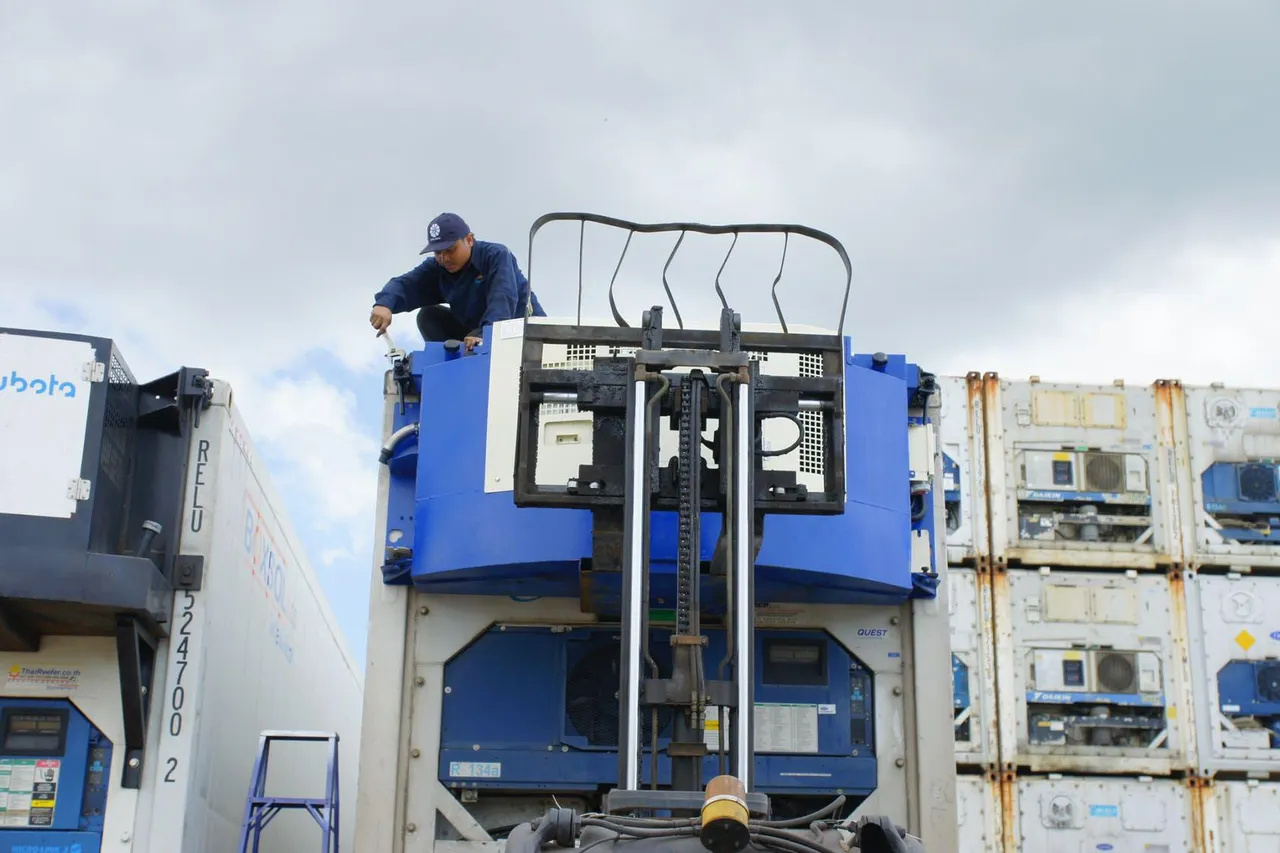
Power is what stalls reefer deliveries, not freight
A refrigerated container is the one piece of equipment where the delivery can go perfectly and the unit still can't do its job on day one. A dry container needs level ground and truck access. A reefer needs level ground, truck access, and a power supply it can actually run on — and the power supply is the part buyers most often discover is wrong after the unit is already sitting on their pad.
This is worth sorting out before you reserve, not after. The electrical spec on a reefer isn't a preference you can work around with an extension cord; it's a fixed requirement of the refrigeration machinery bolted to the end of the box.
The standard spec: 460V three-phase
Container refrigeration units are built around three-phase power, and the common supply voltage is 440/460V. That's an industrial spec — it's what you'd find at a port terminal, a packing house, or a commercial facility, and it is not what's available at a typical residential or light-commercial service.
Some units are available with three-phase 208/230V transformers, which widens the range of sites that can run them, and units are generally built for either 50Hz or 60Hz operation (60Hz is the North American standard). Both of those are unit-specific, so treat them as questions to ask about the actual unit you're buying rather than assumptions to carry over from another reefer you've seen.
The practical takeaway: if your site has single-phase power only — which covers most residential services and a fair number of small farm and shop services — a standard reefer will not simply plug in. That's a solvable problem, covered further down, but it needs solving before delivery.
Breaker sizing and grounding
The supply must be grounded. This isn't a best-practice suggestion — it's a safety requirement on equipment drawing this kind of current, and no reputable electrician will commission the connection without it.
Circuit protection scales inversely with voltage, which surprises people expecting the higher-voltage unit to need the bigger breaker. At 440/460V, a 30-amp minimum circuit breaker is the common guidance. At 208/230V, the same unit draws proportionally more current for the same work, so the minimum climbs to around 50 amps.
Running draw on a container refrigeration unit typically lands somewhere in the region of 4–6 kW, varying with the setpoint, the ambient temperature, and how hard the unit is working — a freezer setpoint in a Gulf Coast summer is a very different load from a chiller setpoint in mild weather. Startup draw is higher than running draw, because the compressor pulls a surge on every start cycle. Size the circuit for the surge, not the average, and have a licensed electrician confirm the actual numbers against the unit's nameplate rather than against a figure from an article.
The plug and cable you'll actually receive
Reefer containers that have been in shipping-line service usually arrive with their own power cable already fitted, commonly in the region of 60 feet, terminated in an industrial pin-and-sleeve plug rather than anything resembling a domestic connector. A typical configuration is a four-pin plug — three poles plus earth — rated for the unit's supply voltage.
Two things follow from that. First, the cable length is a real siting constraint: your receptacle needs to be within reach of where the container will actually sit, and a reefer's power connection is at the machinery end, which fixes the container's orientation on the pad. Decide which way the doors face and where the power drop lands at the same time, not separately.
Second, you will almost certainly need a matching receptacle installed. The plug on the container and the outlet on your building are not going to match by luck.
What if your site doesn't have three-phase power?
This is the common case, and there are three realistic routes.
A transformer or phase converter can bridge from what your site has to what the unit needs. This is the right answer when the container is going to live permanently at a site that has adequate single-phase capacity — but it is an electrical project with real cost, and it needs an electrician to size correctly.
Upgrading the service is the cleanest long-term answer if you're going to run more than one unit or add other three-phase equipment later. It's also the slowest and most expensive, since it involves your utility.
A generator set sidesteps the grid entirely. This is the standard answer for remote sites, temporary placements, and anywhere a service upgrade isn't worth it for a single container — and it's why gensets and reefers are so often bought together. If that's your situation, clip-on and undermount gensets covers which mounting style suits a stationary container versus one that moves.
Transformers and phase converters: what's involved
If you're going the conversion route, it's worth understanding that "transformer" and "phase converter" solve two different problems, and some sites need both.
A transformer changes voltage. If you already have three-phase power but at the wrong voltage — 208V service against a unit expecting 460V, say — a transformer is the appropriate answer, and it's a relatively contained piece of work.
A phase converter creates three-phase power from a single-phase supply. This is the harder problem, and the reason it's harder is that your single-phase service has to be able to deliver the total power the unit needs in the first place. A converter changes the shape of the supply; it does not create capacity that isn't there. A site with a small single-phase service may need a service upgrade regardless.
Rotary converters are generally the type suited to motor loads like refrigeration compressors, because they handle the startup surge better than cheaper static types. Sizing must account for that surge rather than the running draw — an undersized converter will fail to start the compressor, or will start it in a way that shortens its life.
All of this is an electrician's assessment, not a decision to make from a spec sheet. The useful thing you can do in advance is find out what your service actually is — voltage, phase, and available amperage — because that's the first question any electrician will ask.
Who installs what, and in what order
The sequence matters, because doing these steps out of order is how people end up with a container they can't run.
First, confirm the unit's actual electrical requirements from its nameplate — not from a listing, not from an article, from the plate on the machine. Second, have an electrician assess your existing service against those figures and tell you what's needed. Third, get that work quoted, because it's part of the project cost and can occasionally exceed the price difference between buying and renting. Fourth, complete the electrical work, or at least have it scheduled and confirmed. Only then does delivery make sense.
The receptacle is your responsibility and your electrician's work. The cable and plug come with the container. The point where they meet is the point where a mismatch becomes obvious, so give your electrician the plug specification before they buy the receptacle rather than after.
Permitting and inspection requirements for this kind of work vary by jurisdiction. That's a question for your electrician and your local authority, and it's worth asking early because it can affect timing more than the physical work does.
Electrical mistakes that cause problems after delivery
Assuming the container will match an existing outlet. It won't. Reefer plugs are industrial pin-and-sleeve connectors and there's no standard building receptacle they fit.
Sizing the circuit for running draw rather than startup surge. The compressor pulls significantly more current on each start than while running, and a breaker sized for the average will trip — intermittently, which is worse than failing outright because it takes longer to diagnose and can spoil a load in the meantime.
Placing the receptacle without regard to the container's orientation. The power connection is at the machinery end and the cable is finite, so the receptacle location dictates which way the container must face — and therefore which way the doors open. Decide both together.
Running an extension. Voltage drop over a long undersized run causes the unit to draw more current, run hotter, and fail earlier. If the distance is genuinely long, that's a case for relocating the receptacle, not for extending the cable.
Skipping the ground. It's a safety requirement on equipment drawing this kind of current, and no reputable electrician will commission the connection without it.
What to confirm before you reserve
Four questions cover most of it. What is the unit's supply voltage and frequency? What breaker size does its nameplate call for? What plug is fitted, and how long is the cable? And does my site already have a grounded supply that matches, or do I need a transformer, a service upgrade, or a genset?
Answer those before the deposit and delivery becomes a logistics problem instead of an electrical one. If you're still working through condition and machinery questions too, our used reefer inspection checklist covers what to look at on the unit itself, and the reefer container buying guide covers the wider picture.
If you're not sure what your site can support, call the number in the header before you reserve — it's a faster conversation than a return.
Frequently asked questions
- What voltage does a reefer container need?
Container refrigeration units are built around three-phase power, and the common supply voltage is 440/460V. Some units are available with three-phase 208/230V transformers, and units are generally built for either 50Hz or 60Hz operation, with 60Hz the North American standard. Both are unit-specific, so confirm them against the nameplate of the actual container you are buying.
- Can a reefer container run on single-phase power?
Not directly. A standard container refrigeration unit needs three-phase power, so a site with single-phase service only — which covers most residential supplies and many small farm and shop services — cannot simply plug one in. The routes around it are a transformer or phase converter, a service upgrade through your utility, or a generator set.
- What size breaker does a refrigerated container need?
Circuit protection scales inversely with voltage, which surprises people. At 440/460V a 30-amp minimum circuit breaker is the common guidance. At 208/230V the same unit draws proportionally more current for the same work, so the minimum rises to around 50 amps. The supply must be grounded, and a licensed electrician should confirm against the unit's nameplate.
- How much power does a reefer container use?
A container refrigeration unit under load typically draws somewhere in the region of 4 to 6 kW while running, varying with the setpoint, ambient temperature and how hard the unit is working. It cycles rather than running continuously at full draw. Startup draw is higher than running draw because the compressor pulls a surge on each start, so circuits should be sized for the surge.
- What kind of plug does a reefer container use?
Reefer containers that have been in shipping-line service usually arrive with their own power cable already fitted, commonly around 60 feet long, terminated in an industrial pin-and-sleeve plug — typically a four-pin configuration of three poles plus earth. You will almost certainly need a matching receptacle installed, since the container plug will not match a standard building outlet.