Clip-On vs. Undermount Gensets: Which Reefer Power Setup Fits
By Container One Depot Equipment Team
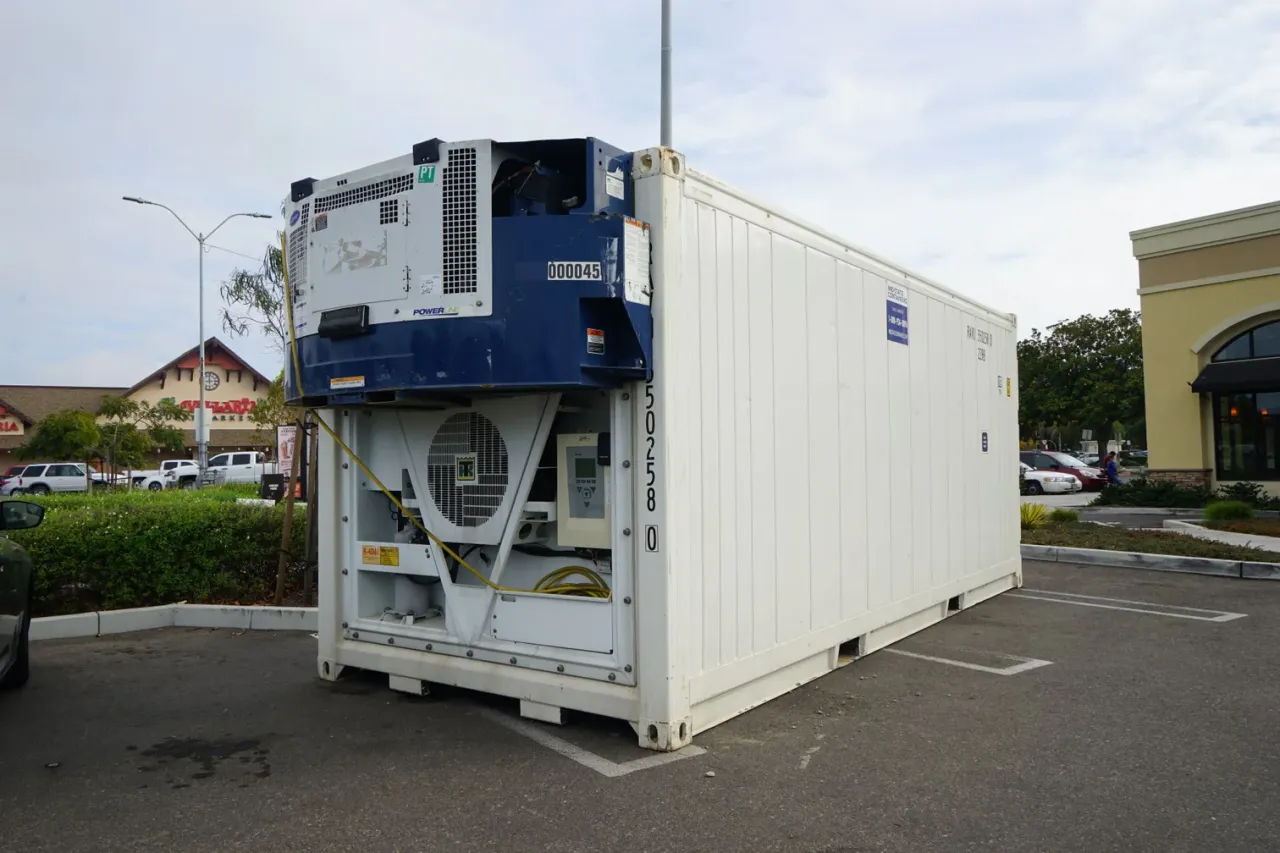
What a genset does for a reefer container
A refrigerated container needs continuous power. When it's sitting at a terminal or a packing house, that comes from a grid connection. When it's on a truck, on a rail car, or parked somewhere with no adequate service, it comes from a genset — a diesel generator set sized and configured specifically to run container refrigeration machinery.
The choice between clip-on and undermount is a mounting decision, and mounting turns out to determine almost everything else that matters: how fast you can swap the unit, how much it interferes with the container, and whether it suits a box that moves or a box that stays put.
A terminology trap worth clearing up first
"Undermount" gets used for two genuinely different pieces of equipment in this industry, and conflating them causes real ordering mistakes.
An undermount genset mounts beneath the chassis — the road trailer that carries the container. An undermount refrigeration unit is something else entirely: it's the cooling machinery itself, mounted under the container's floor rather than on its end wall, as an alternative to the more common end-mounted arrangement.
So "I need an undermount unit" is an ambiguous request. If you're replacing the machinery that cools the box, you want a refrigeration unit. If you're powering machinery that already exists, you want a genset. Both live in our Refrigeration Units & Gensets category, which is exactly why it's worth being specific about which one you're asking for.
The rest of this article is about gensets — the power source, not the cooling machinery.
Clip-on gensets: fast to fit, easy to move
A clip-on genset attaches to the front of the container, engaging the corner castings — the same reinforced steel corner fittings used for lifting and securing the box. Fitting and removal is quick, measured in minutes rather than hours, and requires no modification to either the container or the chassis.
That speed is the whole point. In intermodal operations, a container may be powered by shore supply at a terminal, by a clip-on genset for a road leg, and by shore supply again at the destination. A genset that can be fitted and pulled quickly is a shared resource across a fleet of containers rather than a fixture on one of them.
The trade-off is that the genset sits on the outside of the container, adding to the overall length and standing where it can be knocked, weathered, and seen. For an operation that moves a lot of boxes with a smaller pool of gensets, that's an easy trade.
Undermount gensets: built into the haul
An undermount genset mounts beneath the chassis frame, out of the way. Because it sits low and under the load, it keeps the container's exterior clear and lowers the combination's centre of gravity, which helps road handling and stability.
The design assumption is permanence. An undermount genset is paired with a chassis, not passed around between containers, which suits long-haul operations where a tractor, chassis, and reefer travel together consistently. Installation is a more involved job than clipping a unit onto corner castings, and servicing means working underneath the trailer.
If your reefers spend their working life on the road with dedicated equipment, that permanence is a feature. If your containers get shuffled, it's friction.
The static storage case most guides skip
Nearly everything written about reefer gensets assumes the container is moving — intermodal transfers, long-haul trucking, rail. But a large share of refrigerated containers never move again after delivery. They become fixed cold storage on a farm, at a jobsite, behind a restaurant, or at a remote facility.
For a stationary container on a site with no adequate three-phase service, a genset isn't a transport accessory — it's a substitute for the grid connection you don't have. In that scenario the calculation changes completely. Swap speed is irrelevant, because you're never swapping it. Chassis mounting is irrelevant, because there's no chassis. What matters is runtime, fuel logistics, noise at the site, and easy access for routine service.
That generally points toward a clip-on unit or a standalone generator rather than an undermount, simply because neither requires a chassis to mount to. If the load is substantial or you're powering more than the container, a standalone unit from our Generators & Power Systems range may make more sense than a container-specific genset at all.
Fuel, runtime and refuelling logistics
The specification most people compare is power output. The one that determines whether the arrangement actually works day to day is fuel capacity relative to runtime.
A genset's tank size and consumption rate together give you a refuelling interval, and that interval has to fit your operation. A unit that needs attention every day is a materially different proposition from one that runs several days unattended — particularly at a remote site, over a weekend, or anywhere staff aren't present continuously.
Consumption isn't constant, either. A genset powering a reefer works harder when the container is pulling down to temperature, in high ambient heat, and at a freezer setpoint than it does holding a chiller setpoint in mild weather. Plan refuelling around the demanding case rather than the average, because running dry is not a graceful failure — it's a warm container and potentially a lost load.
For permanent installations, an auxiliary or larger fuel tank is often worth the cost purely to extend the interval. And whatever the arrangement, fuel has to get to the site: access for a fuel truck, or safe on-site storage, is part of the plan rather than a detail to resolve later.
Noise, emissions and siting
A diesel genset running continuously is not a quiet neighbour, and this catches people out when the container is anywhere near a workplace, a residence, or a property line.
Sound-attenuated enclosures exist and make a real difference, but they cost more and add bulk. If the genset is going somewhere noise matters, specify for it up front — retrofitting attenuation is harder than buying it.
Exhaust needs somewhere to go, away from air intakes, doors, windows, and anywhere people work. This is a genuine safety consideration, not just a comfort one.
Local rules on generator siting, noise limits, fuel storage, and emissions vary by jurisdiction and are not something we can advise on directly — but they're worth establishing before you commit, particularly for a permanent installation in a populated area. The same goes for any permitting your authority requires.
Servicing and buying used
A genset is an engine, and engines need scheduled maintenance: oil and filters, coolant, belts, fuel filtration, and load testing. Access matters here and it's one of the practical arguments in the clip-on versus undermount comparison — servicing an undermount unit means working underneath a trailer, which is slower and less pleasant than working on a clip-on at standing height.
If you're buying a used genset, ask for running hours, service history, and ideally see it run under load. An engine that starts readily and runs steadily under load is telling you far more than a visual inspection can. Watch for oil leaks, exhaust smoke that doesn't clear, and unstable output.
Also confirm the electrical output matches what your container needs — voltage, frequency, phase, and the connector — before purchase rather than after. A genset that produces the wrong voltage is not a fixable problem in the field. The specification to check it against is in our reefer container electrical requirements guide.
Matching the setup to your operation
A short way to decide: if containers move frequently and gensets are shared across a fleet, clip-on. If tractor, chassis, and reefer stay together on long hauls, undermount. If the container is parked permanently and the genset is standing in for a grid connection, clip-on or a standalone generator, chosen for runtime and serviceability rather than swap speed.
Before ordering either, confirm what the container actually needs — reefer container electrical requirements covers the voltage, frequency, and breaker figures a genset has to satisfy. And if you're choosing the refrigeration machinery itself rather than the power source, Thermo King vs. Carrier covers that decision.
If you're still at the stage of choosing the container rather than how to power it, start with the reefer container buying guide.
Frequently asked questions
- What is the difference between a clip-on and an undermount genset?
A clip-on genset attaches to the front of the container, engaging the corner castings, and can be fitted or removed in minutes without modifying the container or chassis. An undermount genset mounts beneath the chassis frame, keeping the container exterior clear and lowering the centre of gravity, but it is designed for permanence and is paired with a chassis rather than passed between containers.
- Is an undermount genset the same as an undermount refrigeration unit?
No, and confusing them causes real ordering mistakes. An undermount genset mounts beneath the road chassis and supplies power. An undermount refrigeration unit is the cooling machinery itself, mounted under the container floor rather than on the end wall. If you are replacing the machinery that cools the box you want a refrigeration unit; if you are powering machinery that already exists you want a genset.
- Which genset is better for a stationary refrigerated container?
For a container that never moves, a clip-on genset or a standalone generator generally makes more sense than an undermount, simply because neither requires a chassis to mount to. Swap speed becomes irrelevant when you are never swapping it, so the priorities shift to runtime, fuel logistics, noise at the site, and easy access for routine servicing.
- Why do reefer containers need a genset?
A refrigerated container needs continuous power. At a terminal or packing house that comes from a grid connection, but on a truck, on a rail car, or at any site without an adequate electrical service, it comes from a genset — a diesel generator set sized and configured specifically to run container refrigeration machinery.
- Can a genset replace a grid connection for cold storage?
Yes, and this is a common use that most genset guidance overlooks. Many refrigerated containers never move again after delivery and become fixed cold storage on farms, jobsites or remote facilities. Where the site has no adequate three-phase service, a genset functions as a substitute for the grid connection rather than as a transport accessory.